
Choose the record that answers your question
A useful sports source is the record that matches the question in front of you. A final result answers who won; a rulebook explains the competition’s scoring; an order of play identifies a day and court; a player profile provides biography and career information. None replaces all the others. This directory groups official resources by the kind of answer they can provide.
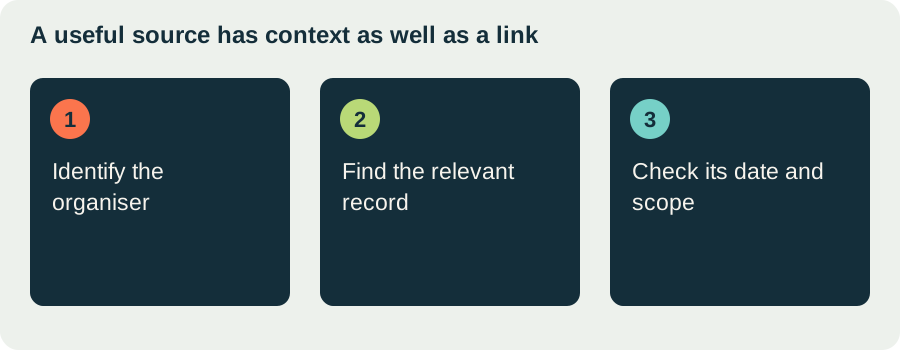
Start with the competition, year and record type. Then check the latest relevant notice before making a plan or repeating a claim. An official organisation can update a fixture or correct a statistic, and an older official page can remain online after the change. The point of using an original record is to inspect the details, not to assume every page with a familiar logo answers every question.
Official resources at a glance
| Question | Official starting point | Record to look for |
|---|---|---|
| What happened in an NBA game? | NBA Games | Final status, box score and play-by-play |
| What is the PBA’s current announcement? | PBA news | Conference and game notice |
| When is a PVL match assigned? | PVL schedule | Date, teams, venue and status |
| Which WTA event is being played? | WTA tournaments | Event page, draw and order of play |
| What does a tennis term mean? | ITF tennis glossary | The relevant definition and format |
| Which indoor-volleyball rules apply? | FIVB rules | Current rule edition and event variations |
| What are the pickleball rules? | USA Pickleball rules | Rulebook, year and approved changes |
| What was an athletics finishing mark? | World Athletics results | Event, round, mark and attempt sequence |
| What was a gymnastics apparatus result? | FIG athlete results | Competition, apparatus and final row |
Basketball: use the game record and league context together
The NBA Games page is useful for finding a fixture and opening its completed record. Check the date and whether the game is final before comparing totals. A live score card, the full box score and the play-by-play provide different levels of detail. The NBA score-reading guide explains how to move between them without treating a quarter total as the full result.
For the PBA, begin with the league’s own announcement and preserve the conference name. A statement about one cup’s playoff format should not be silently applied to every other conference. PBA and NBA also use the word “conference” differently. Our PBA guide provides the competition background; the original league notice provides the dated arrangement.
For an actual statistical disagreement, locate the same matchup and date in the underlying game record. A recap may round a percentage or emphasise a different part of the match. Comparing two headlines cannot resolve whether one individual total was later corrected.
Volleyball: separate the schedule from the standings
The PVL schedule identifies assigned matches and venues. A standings table identifies the competition position. A match report identifies the completed outcome. When asking where a team stands after a result, you may need all three, particularly if teams have played different numbers of matches.
Preserve the conference and stage. A group table is not automatically the final overall table, and a fixture’s original date may differ from a rescheduled appointment. If planning to attend, check the current venue and organiser notice close to the event. The PVL schedule guide focuses on those practical details rather than reproducing an unmaintained calendar.
For scoring or rotation questions, use the FIVB indoor rulebook alongside the competition’s own published format. Beach volleyball and indoor volleyball have different contexts. An article about one should not be used as an unspecified answer for the other.
Tennis: the draw, order of play and result are distinct
A WTA tournament page connects several records. The draw shows opponents and possible progression. The order of play assigns matches to a day and court. The result shows what happened after play. An entry list belongs earlier in that sequence and does not by itself confirm a future opponent or a precise start.
When following Alexandra Eala, the WTA player profile is useful for biography and listed career milestones. For a particular match, move to the event record. The Eala career guide explains the historical title categories; it should not be mistaken for a live order of play.
For men’s professional tennis, ATP Tour is an appropriate official starting point. For broader rules and international tennis context, use the ITF. Always keep singles and doubles, qualifying and main draw, and junior and professional categories attached to the record you are reading.
Rules: select an edition before selecting a sentence
A rulebook needs a year or edition. A short introduction can explain the usual game but omit competition variations and recent changes. Begin with the governing body’s current rulebook page, then use the applicable change document or event regulations for a specific question.
USA Pickleball provides a useful example. Some older explanatory pages described a serving-only game-winning point in provisional rally scoring. The 2026 rule-change document records a different position for that option. Choosing the first search result without checking the rule year can therefore produce a contradiction even between pages from the same organisation.
This directory does not repeat the full scoring lessons. Use the pickleball rules guide, volleyball scoring guide and tennis guide for worked explanations, then inspect the underlying official rules when the precise condition matters.
Athlete profiles: biography and current activity age differently
A date of birth and a completed historical title remain stable facts unless the underlying record is corrected. A ranking, club, current event or next appearance can change. Check the date attached to each kind of information instead of treating everything on a profile as one timeless snapshot.
The FIG athlete results area is useful for named gymnastics events and apparatus scores. World Athletics separates profiles from individual competition results. The IWF provides weightlifting records and regulations. These sources allow a reader to distinguish a career milestone from the result of a specific final.
Do not turn a profile’s current-status label into an explanation of health or retirement without supporting evidence. Nor should a career biography’s old ambition be repeated as a current plan after the named competition has already happened. The Philippine athletes guide connects selected achievements to the records that establish them.
Viewing information belongs with the current service
A broadcaster’s old announcement can establish who carried an event at the time; it may not establish today’s package or rights. For a present subscription question, use the provider’s current package and help information from the viewing location concerned. A channel listing in one country should not be assumed to apply in the Philippines.
The NBA League Pass help guide and its related blackout, device and renewal pages illustrate the separate questions involved. The League Pass Philippines guide explains how to compare those answers. A highlights clip, full replay and live stream remain different ways of accessing the sport.
A source-reading worksheet
For a record you intend to use again, keep six short notes: organisation, page title, competition, event or match, publication or update date, and the exact fact you found. Add whether the record is provisional or final. You do not need to copy the entire source to preserve the reason you used it.
For example, a hypothetical note might read: “League results, Cup A, Team Blue versus Team Gold, final, checked after the game; confirms the total and winning side.” A separate note for the rulebook might explain the playoff format. Keeping the two purposes apart makes a later change easier to understand.
When a statement uses a calculation, record its inputs as well as the source. A percentage of shots made requires attempts; a winning percentage requires games played. The original table supplies the numbers, while the arithmetic should be reproducible without guessing which column was used.
When two official records disagree
First confirm they refer to the same event, round, category and date. A qualifying result and a final result are not necessarily competing versions of one fact. A tournament’s local date can also differ from the Philippine date used in a later report.
Next compare the publication sequence. A later correction notice may explain a changed statistic. An older preview may still describe an opponent who withdrew. If the disagreement remains unresolved, preserve the part both records support and leave the disputed detail open rather than selecting the more convenient number.
An illustration: if two official pages agree that a player won a title but display conflicting final-set notation, the title can be reported with the event and year while the disputed notation is left out. This is different from pretending the contradiction does not exist or constructing a new score from fragments of both.
Links that move, fail or ask for a login
A login requirement also does not establish that every reader has access. Do not ask someone to share account credentials merely to inspect a statistic. If a public result or announcement answers the question, it is a better reference for a general reader than a private dashboard that only one subscriber can open.
Historical Philippine Olympic achievements
The Philippine Olympic Committee and Philippine Olympians Association provide national-team and athlete context. For a particular medal, keep the Games, sport and event beside the result, then inspect the relevant competition record. A biographical tribute can explain why an achievement matters without replacing the final results sheet or establishing a current qualification status.
Two examples of a complete source trail
Example one: a match appointment that appears to change days
Imagine a reader sees a tournament listing for Monday evening and a Philippine discussion describing the same match as Tuesday morning. Start with the event’s order of play and its local time zone. Then compare the converted Philippine date. If the conversion explains the difference, the two descriptions need not conflict.
If the local appointment itself changed, look for a later tournament notice. Preserve the difference between a new appointment and a conversion of the old one. The draw can confirm the matchup, but it cannot settle the start time by itself. This trail uses each record for its own purpose instead of expecting one page to answer every scheduling question.
Example two: a title described at the wrong level
Suppose a social summary calls an athlete a major singles champion, while a career profile lists a junior title. Open the original championship result and identify the age category and event. If the result is junior singles, retain that category when describing the achievement. A later professional result should be recorded separately rather than used to relabel the earlier one.
A biographical profile can help identify the athlete and organise the milestones. The actual event record establishes the particular title. Neither a famous opponent’s name nor a trophy image should replace the category written in that record.
Archives, screenshots and copied tables
An archived article can establish what was announced at the time, which is useful when investigating a changed fixture. It may not establish the final arrangement. Record its date and compare it with the later notice, rather than treating the archive as an always-current schedule.
A screenshot or copied table needs its surrounding labels. Without the competition, season, stage and units, a row of numbers can lose its meaning. Keep enough context to distinguish a final result from a live snapshot and a percentage from a total. If the original public page is available, include its link alongside the image so another reader can inspect the same record.
These habits do not require collecting every page about a match. The better source trail is the shortest set of records that actually establishes the claim: identity, relevant event and the fact in question. Extra links that repeat a headline add less than one correctly matched results row or official correction notice.
Questions about this directory
Does an official link mean the organisation endorses Odds PH?
No. The resources identify the publishers of sporting records. The organisations do not operate this website merely because an article links to them.
Can a source be authoritative for one fact and unsuitable for another?
Yes. A league’s own completed result is a strong source for that result. It does not automatically answer an unrelated subscription, medical or personal claim. Match the source’s role to the statement being made.
How can I report an incorrect reference?
Send the Odds PH page, visible link label and the problem to [email protected]. The contact guide explains a concise report; the corrections policy explains review of a disputed fact.