
Sport with more context
Odds PH is an independent sports information website for readers in the Philippines. We cover PBA and NBA basketball, PVL volleyball, boxing, tennis and pickleball, alongside athlete profiles and practical guides.
Our focus is the question behind the result: how a box score fits together, why a match reaches a deciding set, what the judges’ cards mean, or which Philippine date belongs to an overseas fixture. Worked examples explain the arithmetic without passing fictional scores off as real results.
Our editorial address
11 Ortigas Avenue, Ortigas Center, Pasig City, 1605 Metro Manila, Philippines.
For article questions and publication enquiries, email [email protected]. Our contact page also gives the address in Filipino and explains how to submit a correction or enquiry.
Find your starting point
- Sports guides explain rules, scoring and common statistical terms.
- Philippine athletes connects achievements with their competition context.
- Philippine match times helps with overseas schedules and date changes.
- The odds calculator separates probability, hypothetical return and profit.
Who the publication is for
Odds PH is for readers who enjoy sport and want a clearer explanation of what they are seeing. That includes a new fan learning a competition’s vocabulary, a regular supporter comparing team performances and a Philippine viewer trying to follow an overseas event around a local day. Different levels of experience can lead to the same useful question: what does this particular record actually tell us?
The aim is to make that question easier to answer without requiring a reader to know every abbreviation first. A useful explanation identifies the terms that matter, shows how they connect and gives the reader something concrete to work through. It should still be useful after the excitement around one individual result has passed. The subject remains the sport and the reader’s understanding of it.
Why an explanatory sports publication matters
A result can travel very quickly while its meaning travels less clearly. A player total can appear without minutes, a match score without individual sets, or a fixture without the time zone used by its organiser. Each fragment may be accurate, yet a reader can draw the wrong conclusion when the surrounding information is missing. Explanatory coverage supplies those connections.
For example, saying that a player scored more than a teammate establishes one recorded difference. It does not establish who converted attempts more efficiently, who faced a particular defensive task or how the two roles worked together. Odds PH gives space to those follow-up questions. The value of a guide is the understanding a reader can carry into the next contest, rather than a dramatic label attached to the last one.
A Philippine perspective that includes international sport
Local and international competitions belong in the same reading life for many Philippine fans. A supporter can follow a domestic club, a national-team athlete and an overseas league while needing a different kind of information for each. The common connection is the reader’s setting: the language of the explanation, the sporting context and the calendar being used.
That is why Philippine dates and times have a practical place in the coverage. An overseas event can occupy a different calendar day in Manila from the one printed in its home market. Treating the local appointment carefully helps a reader follow the sport without requiring the event itself to become a Philippine competition. Local perspective concerns how information becomes useful, as well as which teams or athletes appear in it.
Why these sports are covered together
PBA and NBA basketball, PVL volleyball, boxing, tennis and pickleball pose different sporting questions. They also create useful opportunities to explain how records work. Basketball connects individual attempts with a team score. Volleyball separates rally points from sets. Boxing distinguishes the action within a round from the way several judges’ cards produce a result. Racket sports add their own serving, scoring and court conventions.
The purpose of covering them together is to make those distinctions understandable, rather than to force one sport’s logic onto another. A reader who learns to ask what a number counts in basketball has a valuable habit to bring to volleyball, but still needs volleyball’s rules to interpret its score. The publication treats that combination of shared reading skills and distinct sporting systems as a useful part of sports knowledge.
Making room for the beginner and the experienced fan
A beginner may need a term explained before a game becomes enjoyable. An experienced fan may know the term but want a better way to compare two performances. Both needs deserve a clear answer. Definitions provide an entry point; worked cases make the next step possible. A table should help a reader see the relationship between its columns, rather than simply display more numbers.
For someone watching with family or friends, that approach also supplies a common language. “The team won three sets” is a different claim from “the team won more rallies”. Once the distinction is clear, people can disagree about tactics without disagreeing about how the match winner was determined. The goal is to make the conversation more precise while keeping the pleasure of following a team or athlete intact.
What a worked example contributes
A carefully chosen fictional example lets a reader inspect an idea without needing to remember an entire real match. The numbers can isolate a single question: how a return differs from a profit, why a shooting percentage needs attempts, or how a narrow series lead changes the wins still required. Its usefulness comes from being understandable and reproducible.
The example remains distinct from an actual sporting record. It does not create a player’s achievement or become evidence that a real team used a particular tactic. On Odds PH, examples are identified as hypothetical so a reader can use them for the concept they demonstrate. A genuine result belongs to the competition and date that produced it; an illustrative calculation belongs to the explanation built around it.
The place of athlete profiles
Athlete coverage gives longer perspective to the succession of match results. A title, a ranking milestone and an appearance in a particular round are different achievements. A profile can connect those milestones while keeping their competition level and date clear. That helps a reader appreciate development without reducing a career to either its latest win or its latest defeat.
It is also important to keep a profile separate from the assumption of personal access. Naming an athlete or discussing a public record does not mean the publication has interviewed that person or represents them. Our athlete pages concern sporting information and its context. The interest of a Philippine audience is a reason to explain the achievement carefully, rather than a reason to add an unsupported personal story around it.
Giving the reader a way to inspect the record
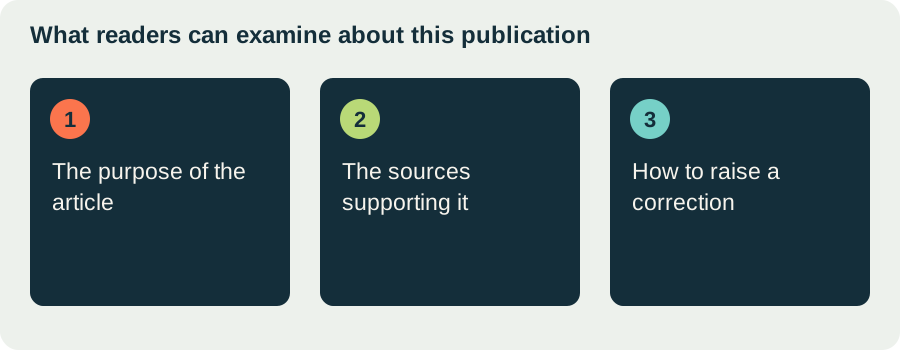
A useful explanation leaves the reader able to go further. A rule discussion can point to the governing body’s rulebook; a result discussion can identify the competition’s game record; a viewing guide can direct attention to the service’s own package information. Each kind of source serves a different purpose. A link is most useful when the reader understands the question it can answer.
The publication’s own role is the explanation around those records. It can connect a formula to a worked case or show why two figures should not be compared directly. The original record retains its own authority over the fact it publishes. This division helps a reader separate the underlying evidence from an interpretation of it, and decide which part of an account they want to examine more closely.
Useful information across different moments of following sport
Before an event, the practical need may be the competition format or the complete local appointment. During play, it may be the meaning of a clock, score or statistical column. Afterwards, it may be a clearer account of the result or an understanding of what changes in a series or table. These are related moments, but a useful article should know which one it is answering.
That is the purpose of having both broader competition guides and more focused explainers. The broader material provides the setting; the focused material develops the particular sporting question. A reader can move between them without expecting an athlete profile to become a schedule or a scoring article to become a subscription catalogue. Keeping those purposes clear makes the collection more useful as it is read together.
Independence and the reader’s choice
Sports information should remain useful whether or not a reader follows a commercial link. A guide to a scorecard can explain the arithmetic in full. A court article can explain the dimensions. A comparison of basketball statistics can show its sample and calculations. Those benefits come from the article itself, rather than from opening an advertisement alongside it.
Odds PH carries labelled partner advertisements and explains that commercial relationship separately. That relationship is visible to the reader, who can then distinguish the promotion from the sporting explanation. Advertising imagery does not create an athlete endorsement, and an illustrative character does not become the real player discussed in a nearby article. The funding and advertising notice sets out the commercial context in more detail.
A practical place for uncertainty
Equally, a clear result does not remove every question about performance. The official winner and the best explanation of how the contest unfolded are different parts of sports discussion. Odds PH gives the completed record its place while leaving room for evidence-based analysis. That combination lets a reader understand what is certain, what is interpretive and what requires another source or another match.
Using the publication in your own sports conversations
Take the question that helped you rather than a collection of labels. If a statistic is being discussed, ask about its attempts or sample. If a schedule appears inconsistent, ask which clock and date it uses. If a decision looks surprising, identify the separate rounds or cards behind it. These habits are useful in conversation even when no article is open in front of you.
The same approach can make following a new competition less intimidating. You do not need to memorise its entire history before watching one contest. Learn the immediate framework, notice one or two meaningful details and return to a fuller explanation when a question arises. The publication exists to support that process of understanding sport, with a recognisable point of contact and a set of guides that readers can examine for themselves.
When an explanation is useful without live coverage
Consider a reader catching up on a finished match while a full replay is unavailable. The publication can still help explain the recorded score, the competition stage or the meaning of a statistic. Its usefulness in that situation comes from the written explanation and the identified record, rather than from access to video. The reader can understand a result without being asked to treat the article as a broadcaster.
The limit is equally concrete. A scoring guide cannot reveal an off-ball movement absent from the record, and an athlete profile cannot supply a newly confirmed start time merely because the player is its subject. A reader needing those details should turn to the appropriate event record or available coverage. This defines the place Odds PH occupies: an explanatory publication alongside the sporting record, with a clear subject and contact route for the explanation it presents.
What to expect when a guide leaves a question open
Imagine a reader comparing two descriptions of a boxing result. The announced winner may be clear while the interpretation of a particular round remains disputed. Odds PH can explain the decision label and the scoring arithmetic without promising that every observer will agree about that round. The useful outcome is knowing which part of the question has been answered.
A similar boundary applies when an event appointment depends on earlier play. An explanation can translate the published time and preserve its condition; it cannot decide how long the preceding match will last. Readers should expect an article to keep such limits visible rather than offer an unsupported precise answer. For a question about the wording itself, the publication email identifies where to raise it. For the organiser’s next announcement, the event’s own record remains the relevant place to look.
Editorial independence
Odds PH is not operated by a league, athlete, broadcaster, payment provider or betting operator. Linking to a sporting record does not imply that its publisher endorses this website. Advertisements are labelled and distinguished from sports articles.
Contact the publication
Our articles use the publication byline Odds PH Editorial. Read our editorial standards and advertising disclosure, or email [email protected] with a question or correction.